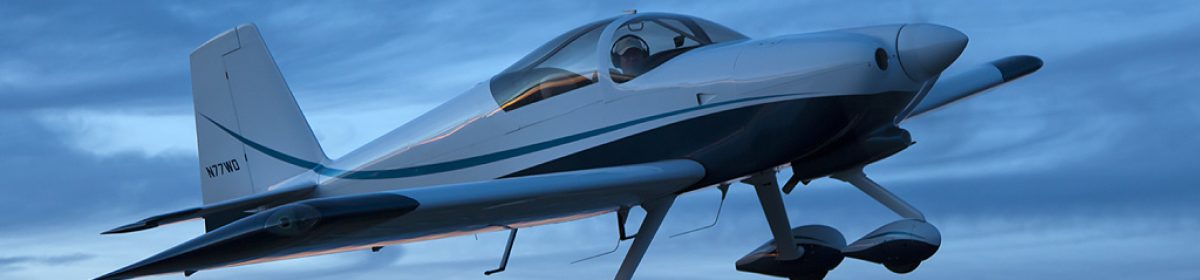
After the empennage, the sliding canopy probably raises more questions than any other installation. Fitting a structure of welded steel spaghetti to a hand-built fuselage is an exercise in patience and perseverance. Given the inevitable variations between individual frames, roll-bars and fuselages, it is not possible to give dimensions that will work every time. Instead, builders are cautioned to slow down and work carefully from “first principles.” The amount of effort and time spent on preliminary positioning and alignment, adjusting both the canopy frame and the canopy skirts, makes a big difference to the quality of the final fit of the canopy.
The RV-6/6A Sliding Canopy Assembly consists of two main components; the Windscreen/roll bar assembly which is fixed to the fuselage, and the Sliding Canopy Frame/Plexiglass canopy which moves fore and aft.
The windshield frame also serves as an overturn structure or “roll bar”. It consists of a formed steel tube weldment with a flanged base which is bolted to the fuselage upper longerons and cockpit rails. The roll bar also includes a center brace which attaches to the upper forward fuselage. The windscreen is screwed to the roll bar and bonded to the top fuselage skin with an epoxy/fiberglass base molding.
The sliding canopy frame of is made of welded steel tubing and moves on nylon rollers and slide blocks. The canopy is trimmed and attached to the steel tube frame with blind rivets and machine screws. Aluminum skirts are used to fair the bottom and rear of the canopy to the fuselage.
The canopy has three contact points with the fuselage; two rollers at the lower forward corners of the canopy frame, and one slider block at the rear top of the canopy frame. The rollers move in extruded aluminum tracks and the rear slider block moves on a builder-fabricated guide track.
The sliding canopy is held closed with an over-center spring-loaded hook latch operated by an internal/external handle. This handle is also used for sliding the canopy open or closed. There are two pins at the rear base of the canopy just aft of the canopy tracks which engage nylon blocks mounted on the fuselage. The front of the sliding canopy is held down by a molded fiberglass lip on the windscreen. The pins and lip serve as passive hold-downs, so operating the sliding canopy requires just one latch and one hand.
Time: 3 hours.
 Leonard's RV-7A Build